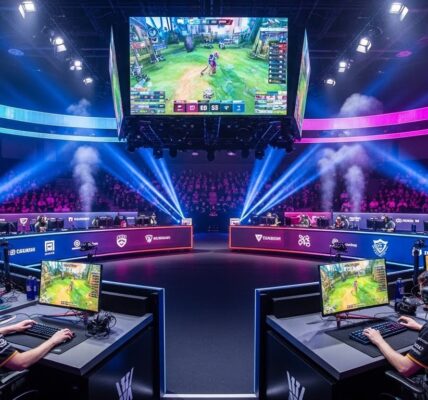
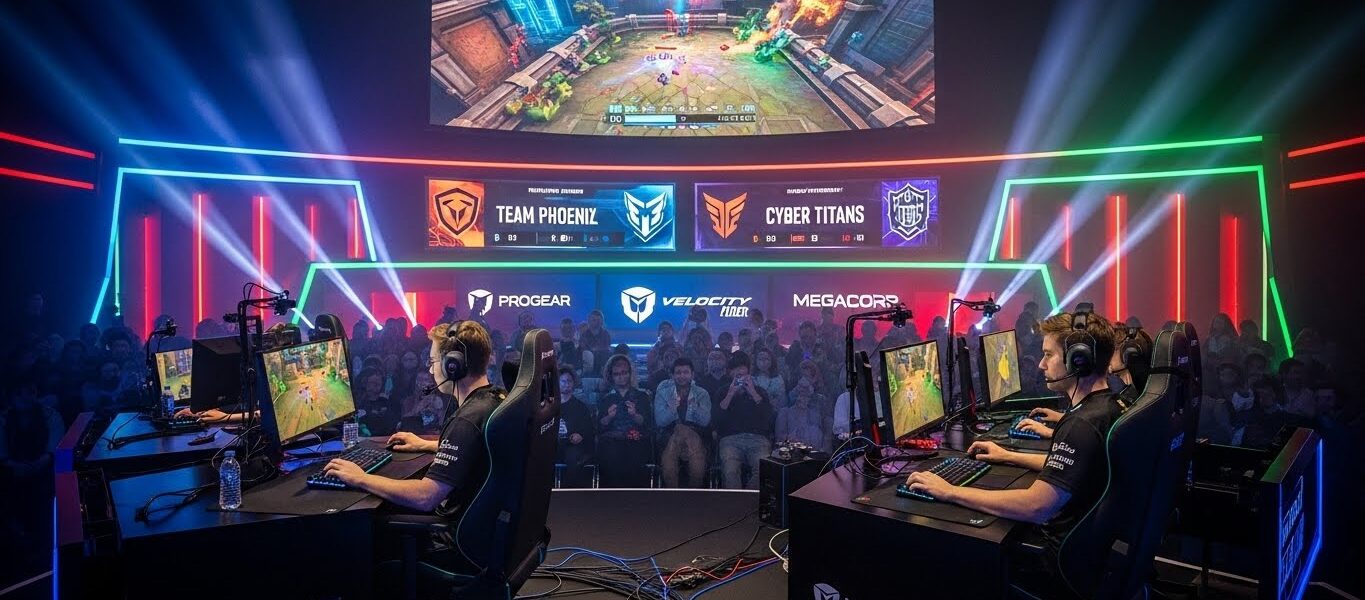

Esports, or competitive gaming, has evolved from a niche pastime into a global entertainment powerhouse. Once dismissed as casual gaming, it now draws millions of viewers, offers lucrative career opportunities, and influences popular culture worldwide. The rapid growth of esports has been fueled by technology, internet connectivity, and the passion of gaming communities. This blog explores the rise of esports, the ecosystem that sustains it, the challenges it faces, and the potential it holds for the future.
The Evolution of Esports
Competitive gaming is not a new phenomenon. It can trace its roots to early video game tournaments in the 1970s and 1980s, when enthusiasts gathered to compete in games like Pong and Space Invaders. These events were often small, local competitions with little recognition beyond their immediate participants. By the 1990s, games like Street Fighter, StarCraft, and Quake began cultivating competitive communities, creating the foundation for professional gaming.
The advent of high-speed internet and multiplayer online games in the early 2000s transformed esports from isolated competitions into a global phenomenon. Online platforms allowed players to compete across continents, leading to the rise of organized leagues, tournaments, and professional teams. Games such as Counter-Strike, Dota 2, and League of Legends became staples of competitive gaming, combining strategic depth, teamwork, and skill to create engaging spectator experiences.
Popular Esports Titles and Their Appeal
The esports industry is diverse, with games spanning multiple genres, each appealing to unique audiences. Multiplayer online battle arena (MOBA) games, like League of Legends and Dota 2, require strategic thinking, precise coordination, and rapid decision-making. First-person shooters (FPS) such as Counter-Strike: Global Offensive and Call of Duty demand accuracy, reflexes, and tactical awareness. Fighting games, sports simulators, and battle royale titles further diversify the competitive landscape, ensuring there is a game to suit every type of player and viewer.
Each title has cultivated its own culture and community. MOBAs attract fans who enjoy complex strategies and coordinated team play, while FPS games appeal to viewers who thrive on fast-paced action. This variety fuels the global popularity of esports, allowing it to reach a wide range of audiences with differing preferences.
The Business of Esports
Esports has grown into a billion-dollar industry with multiple revenue streams. Sponsorships, advertising, broadcasting rights, merchandise, and tournament prize pools all contribute to its financial ecosystem. Professional esports organizations operate similarly to traditional sports franchises, employing players, coaches, analysts, and marketing personnel to maintain both competitive and business success.
Streaming platforms have become central to the esports economy. Players and organizations broadcast live gameplay to millions of viewers, earning revenue through subscriptions, advertisements, and viewer donations. Tournaments are also now major media events, drawing audiences comparable to traditional sports. Additionally, content creators and influencers amplify the reach of esports, blending entertainment with competitive play and fostering engagement with fans worldwide.
Career Opportunities in Esports
The esports industry offers a range of career opportunities beyond professional gameplay. While elite players can earn substantial incomes from tournament winnings, sponsorships, and streaming, other careers include coaching, analysis, content creation, event management, marketing, and broadcasting. Analysts study gameplay to optimize strategies, coaches guide teams to improve performance, and event managers organize major tournaments, ensuring smooth operations.
Professional gaming requires discipline, strategic thinking, and mental resilience. Teams often maintain rigorous practice schedules similar to traditional sports, emphasizing teamwork, communication, and skill refinement. Physical and mental well-being are crucial, as extended gaming sessions and high-pressure competitions can be taxing on players’ health.
Technology Driving Esports Growth
Technology has been instrumental in the rise of esports. High-speed internet and advanced gaming hardware enable seamless online competition, connecting players and fans worldwide. Streaming technology allows real-time broadcasting to global audiences, creating shared experiences and a sense of community.
Emerging technologies such as virtual reality (VR), augmented reality (AR), and artificial intelligence (AI) are shaping the future of esports. VR and AR can offer immersive experiences for players and spectators, while AI-driven analytics provide insights for training and strategy development. As technology evolves, esports will continue to innovate, enhancing both competitive performance and viewer engagement.
Global Reach and Cultural Impact
Esports transcends geographical boundaries, with thriving professional leagues in countries like South Korea, China, and the United States, and rapidly growing communities in Europe, Southeast Asia, and Latin America. International tournaments attract millions of viewers, both online and in stadiums, creating a global fanbase and a shared cultural experience.
The cultural influence of esports is significant. Video games, once dismissed as leisure activities, are now recognized as skill-based competitions requiring strategy, reflexes, and teamwork. Esports has impacted popular media, fashion, and entertainment, creating a unique subculture with its own language, events, and celebrities. Universities and schools have also begun offering esports programs and scholarships, further legitimizing competitive gaming as a professional path.
Challenges Facing the Esports Industry
Despite its rapid growth, esports faces several challenges. Player burnout and career longevity are concerns due to the mental and physical demands of professional gaming. Maintaining competitive integrity, including preventing cheating, match-fixing, and performance-enhancing drug use, is critical to sustaining credibility.
Financial sustainability is another challenge. While high-profile tournaments generate substantial revenue, smaller leagues and amateur events often struggle to secure funding. Additionally, disparities in infrastructure, internet accessibility, and economic support can limit the growth of esports in certain regions. Regulatory frameworks must also evolve to protect players, ensure fair competition, and maintain industry standards.
Collaboration Between Esports and Traditional Sports
A notable trend in esports is its convergence with traditional sports. Many sports organizations have invested in esports divisions, bridging physical sports with digital competition. This collaboration benefits both industries: esports gains legitimacy and exposure, while traditional sports attract younger, digitally native audiences.
Virtual competitions themed around traditional sports, such as football or basketball video games, allow fans to engage with their favorite teams in new ways. Hybrid events combining live sports and gaming experiences are also emerging, creating innovative entertainment models and expanding the reach of both industries.
The Future of Esports
The future of esports is promising, driven by technology, global audiences, and increasing institutional support. Innovations in VR, cloud gaming, AI analytics, and mobile esports are likely to redefine how competitions are played, watched, and monetized.
Ethical considerations will also play a larger role. Ensuring inclusivity, mental health support, and fair play will be essential as the industry grows. Additionally, sustainability, accessibility, and equal opportunity must be prioritized to maintain esports as a global, inclusive phenomenon.
As esports matures, it may further integrate with education, media, and entertainment, creating multi-dimensional experiences that combine gameplay, storytelling, and fan engagement.
Conclusion: Embracing the Esports Era
Esports has grown from small, local competitions into a global industry that impacts culture, technology, and entertainment. It has created new career paths, fostered international communities, and redefined competition for the modern era.
The journey of esports is ongoing, and its potential remains vast. As technology evolves, audiences expand, and professional structures mature, esports will continue to challenge traditional notions of sports and entertainment. For players, fans, and entrepreneurs alike, esports represents a dynamic and rapidly growing world filled with opportunity, excitement, and innovation.
The era of competitive gaming is not just about winning or losing; it is about community, creativity, and the shared thrill of pushing human skill and imagination to new heights. Esports has moved beyond pixels and screens to become a defining feature of modern culture, inspiring the next generation of competitors, innovators, and fans.