
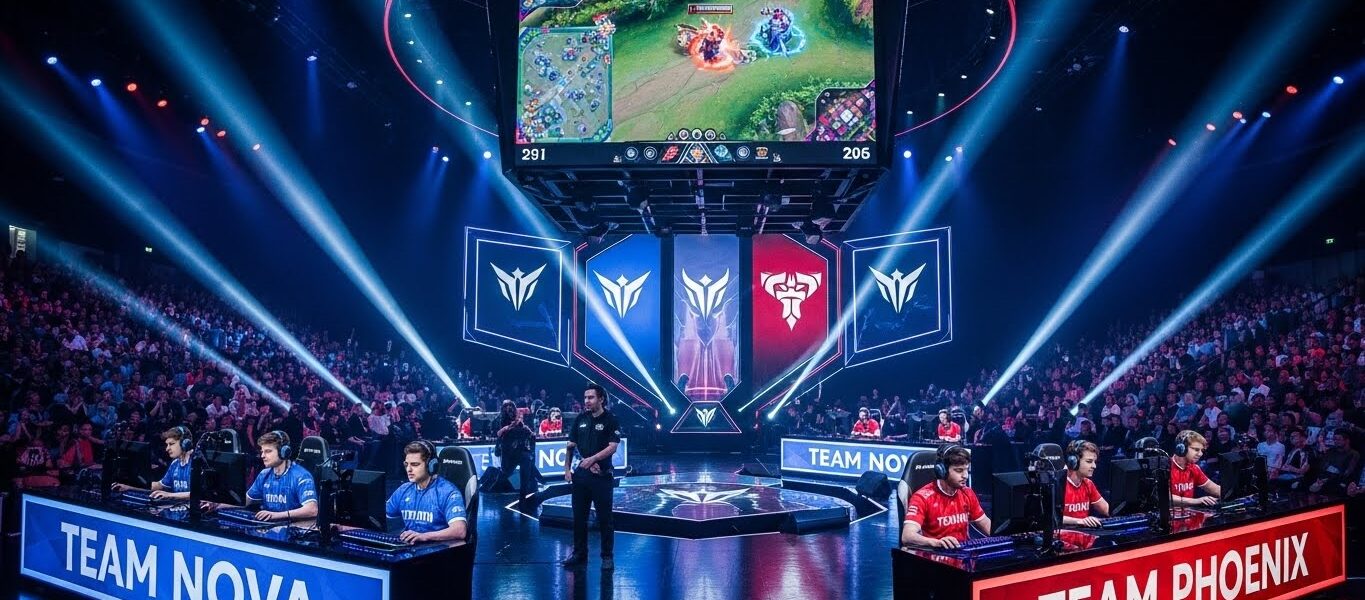

Introduction: The New Age of Sports
Esports, once a niche hobby, has exploded into a global entertainment phenomenon, captivating millions of fans and athletes alike. With the rise of digital technology, online connectivity, and competitive gaming platforms, esports has evolved into a billion-dollar industry, garnering more attention than traditional sports in some regions. Competitive gaming has gone from playing casually at home to dominating global events with massive audiences. This blog post delves into the meteoric rise of esports, its cultural and economic impact, and its future in the ever-changing digital landscape.
A Glimpse into the Early Days of Esports
Before we dive into the present and future of esports, it’s important to understand its origins. Competitive gaming has existed in some form since the 1970s, when players in arcades competed for high scores in games like Space Invaders and Pac-Man. However, it wasn’t until the 1990s, with the advent of personal computers and the internet, that esports began to take shape. Titles like Warcraft, StarCraft, and Quake were among the first to introduce online multiplayer modes, allowing players from around the world to compete against each other.
By the early 2000s, major tournaments began to form, most notably The World Cyber Games (WCG) and ESL (Electronic Sports League), giving birth to the first international esports competitions. While these events were far smaller in scale compared to today’s tournaments, they marked a turning point in gaming, establishing the foundation for what would become an increasingly professionalized industry.
The Transformation into a Global Industry
Fast forward to today, and esports has become a multi-billion-dollar global industry, complete with professional teams, coaches, analysts, and even fan merchandise. The shift from casual gaming to a fully organized competitive ecosystem occurred over the last two decades, driven by several key factors: better internet infrastructure, improved gaming technology, and the rise of streaming platforms like Twitch and YouTube Gaming.
With the proliferation of high-speed internet, players from every corner of the globe could now compete against each other in real-time. What was once limited to a small community of hardcore gamers has expanded to include millions of fans who follow their favorite teams, watch tournaments online, and even attend live events. Esports is now a truly global endeavor, with massive fanbases in North America, Europe, China, South Korea, and beyond.
The Popularity of Esports Titles
For a game to rise to the level of esports, it must offer more than just fun gameplay—it must be competitive, skill-based, and engaging to both players and viewers. Several titles have risen to dominate the esports scene, and these games represent the core of the esports ecosystem.
League of Legends (LoL) is one of the most successful and influential esports games ever created. Developed by Riot Games, LoL features a blend of strategy, teamwork, and individual skill, attracting millions of players and viewers worldwide. Its annual World Championship, held since 2011, regularly draws in millions of viewers, cementing its place as one of the most-watched esports events globally.
Another titan in the esports arena is Dota 2, developed by Valve. Known for its steep learning curve, Dota 2 requires immense strategy and coordination, making it a favorite for serious esports fans. The game’s annual tournament, The International, is known for having one of the largest prize pools in all of esports, often surpassing tens of millions of dollars.
In addition to these two heavyweights, other games like Counter-Strike: Global Offensive, Valorant, and Fortnite have played crucial roles in the growth of esports, attracting both professional players and casual enthusiasts. Battle royale games like PUBG and Apex Legends have also risen in prominence, providing fresh competitive formats with large-scale, high-stakes matches.
The Role of Professional Players and Teams
Esports has evolved to the point where professional players are akin to athletes in traditional sports. The level of skill, dedication, and focus required to succeed in esports is staggering. Professional players spend hours each day honing their craft, practicing in teams, and studying gameplay strategies. These players are often scouted by esports organizations, who offer them salaries, sponsorships, and even management teams.
Teams in esports operate much like traditional sports teams. They have coaches, analysts, team managers, and even nutritionists and psychologists. This professional infrastructure ensures that players are not only physically and mentally prepared for competition but also supported in their personal lives.
Esports teams often compete in leagues or tournaments, with top performers earning lucrative sponsorships and prize money. In addition to traditional team games like League of Legends, many esports professionals have found success in individual games, streaming their gameplay on platforms like Twitch and YouTube, where they can earn revenue through donations, subscriptions, and advertisements.
The Growing Viewership and Audience Engagement
One of the most remarkable aspects of esports is its massive and ever-growing audience. According to industry reports, the global esports viewership has surpassed 500 million people, with millions more participating in esports-related activities online. Esports events, such as The League of Legends World Championship or The International, attract millions of viewers who tune in to watch the live broadcast or stream the event on various platforms.
Streaming platforms like Twitch have been crucial in the rise of esports, allowing players to stream their gameplay to thousands—or even millions—of viewers. Twitch, in particular, has become synonymous with gaming culture and esports, providing fans a platform to engage with their favorite players, watch live matches, and even chat with other viewers in real-time.
The level of audience engagement is another unique feature of esports. Fans don’t just watch the events; they become active participants. Viewers can interact with players via social media, discuss strategies on forums, and even influence gameplay by donating to their favorite streamers. Esports has created a highly interactive and connected community that rivals that of any traditional sport.
The Economic Impact of Esports
Esports is not just a cultural movement; it is also a significant economic force. As the industry grows, so does its economic impact. Prize pools for major tournaments have skyrocketed, with some events offering multi-million-dollar payouts. For example, The International 2021 had a prize pool of over $40 million, with the winning team taking home a large share of the prize.
Sponsorship deals play a critical role in the financial backing of esports teams, events, and leagues. Brands from various sectors, including tech, energy drinks, automotive, and fashion, have jumped on the esports bandwagon, sponsoring major events and teams. This influx of corporate investment has allowed the industry to thrive and attract more talent, both in terms of players and content creators.
In addition to sponsorships, esports generates revenue from merchandise sales, ticket sales for live events, advertising, and subscription services. The expansion of esports into other sectors, such as sports betting and virtual currencies, has also contributed to its rapid growth.
Esports and Traditional Sports: A Growing Synergy
While esports has carved out its own identity, it is also beginning to intersect with traditional sports. This synergy is most evident in the increasing number of partnerships between esports organizations and traditional sports teams. For instance, major professional sports leagues, like the NBA and NFL, have established esports leagues and teams, recognizing the potential of gaming and its fan base.
In some cases, professional athletes from traditional sports are investing in or even becoming involved in esports teams. Basketball superstar Michael Jordan is among the many athletes who have shown interest in esports, having become a minority owner of an esports team in recent years. Such collaborations are helping bridge the gap between gaming and traditional sports, elevating esports to a more mainstream level.
Esports in Education and Career Pathways
Esports is also making its way into educational institutions, offering students opportunities to build careers in gaming and esports-related fields. Many universities now offer esports programs that provide scholarships to talented players and allow them to compete at the collegiate level. These programs are helping foster the next generation of professional players, coaches, analysts, and game developers.
Esports also offers career opportunities beyond playing. Students can pursue degrees in game design, event management, digital marketing, and more, with esports serving as a foundation for future career paths. The rise of esports as an educational tool helps ensure its long-term sustainability, while giving students the chance to enter an industry that is rapidly growing in influence and profitability.
The Future of Esports
As esports continues to evolve, there are several exciting developments on the horizon. The potential for virtual and augmented reality in esports is immense. These technologies could create more immersive experiences for players and fans, allowing for new forms of competitive play that were previously unimaginable.
Another trend in esports is the increasing inclusion of mobile gaming. Titles like PUBG Mobile and Mobile Legends are gaining traction, particularly in regions where mobile devices are more accessible than high-end gaming PCs or consoles. As mobile esports grows, it will further diversify the esports landscape, bringing new audiences into the fold.
Additionally, esports is expected to become more integrated into mainstream entertainment. We could see esports featured as part of larger cultural events like the Olympics or global festivals, cementing its place in the fabric of global entertainment.