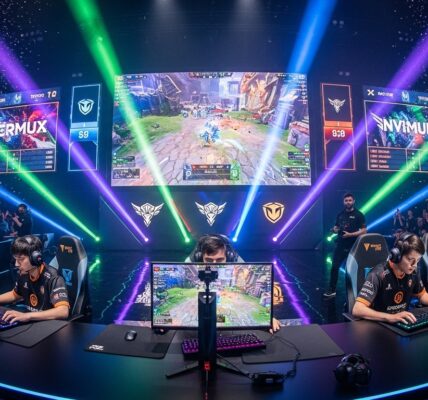


Esports, or electronic sports, has come a long way from its humble beginnings. What started as a niche hobby among avid gamers has evolved into a global industry worth billions of dollars. Today, esports attracts millions of viewers worldwide, offers lucrative career opportunities for players, and has become a staple in the broader entertainment landscape. This blog post explores the evolution of esports, its rise to mainstream popularity, the key factors driving its growth, and the impact it has had on gaming, culture, and society.
The Humble Beginnings of Esports
Esports has its roots in the early days of gaming, long before it became the massive industry it is today. The first instances of competitive gaming can be traced back to the 1970s, when the game Spacewar gained popularity in university labs and arcades. These informal competitions were small-scale, but they were the starting point for what would eventually become a global phenomenon.
As technology advanced, multiplayer games began to emerge, and local area network (LAN) tournaments became a regular part of the gaming scene. The introduction of internet connectivity in the 1990s further accelerated the development of competitive gaming. Games like Quake and Warcraft allowed players to compete with one another over the internet, and this marked the beginning of online tournaments and leagues.
However, it wasn’t until the late 1990s and early 2000s that competitive gaming started to take a more organized shape. The real breakthrough came with StarCraft, a real-time strategy game released in 1998. South Korea played a pivotal role in the development of esports, as StarCraft became the centerpiece of organized competitions. The establishment of the Korean eSports Association and the launch of professional StarCraft leagues helped set the stage for the esports industry as we know it today.
The Growth of Esports in the 21st Century
The early 2000s saw the emergence of online platforms and the rise of multiplayer gaming, which significantly boosted the visibility of esports. As high-speed internet became more accessible, competitive gaming began to reach a global audience. Titles like Warcraft III and Counter-Strike laid the foundation for large-scale online tournaments, while League of Legends, Dota 2, and Overwatch took the industry to new heights.
One of the key developments in esports’ rise to prominence was the growth of live streaming. Platforms like Twitch and YouTube Gaming gave gamers a way to showcase their skills to an audience of millions. Twitch, founded in 2011, revolutionized the way people consumed gaming content. The ability to watch live competitions and interact with players directly created a new dimension for esports and set the stage for it to become a mainstream form of entertainment.
Streaming provided a new career path for gamers, with top streamers earning substantial incomes through sponsorships, donations, and advertisements. This helped foster a more professional and organized esports scene. Gamers who once competed as amateurs now had the opportunity to turn their passion into a lucrative career.
The Emergence of Major Esports Titles
As the esports ecosystem grew, several games emerged as frontrunners in the competitive scene. One of the most notable games in the history of esports is League of Legends (LoL), a multiplayer online battle arena (MOBA) game developed by Riot Games. Since its release in 2009, LoL has become one of the most popular and competitive games in the world. The League of Legends World Championship, commonly known as Worlds, is an annual event that attracts millions of viewers worldwide, with the 2020 finals garnering over 3.8 million concurrent viewers.
Another significant title in the esports industry is Dota 2, developed by Valve. The game is known for its complex gameplay and high skill ceiling, which has made it a mainstay in esports tournaments. The Dota 2 International tournament, which started in 2011, set a precedent for massive prize pools in esports. The 2021 prize pool for Dota 2‘s International reached an astounding $40 million, making it one of the largest prize pools in esports history.
First-person shooters (FPS) also became a significant part of the esports scene. Games like Counter-Strike, Call of Duty, and Overwatch have their own competitive leagues and tournaments. These games brought in a different type of player and fan, leading to a diversification of esports genres and audiences.
The wide variety of games and genres has allowed esports to cater to a broad range of tastes, attracting players and fans from all over the world. This diversity has been one of the driving forces behind the rapid growth of the industry.
Esports as a Professional Career
In the early days, competitive gaming was often seen as a hobby or a pastime. However, as esports grew in popularity, it became increasingly clear that it could offer serious career opportunities. Professional esports players, coaches, analysts, and even streamers can earn substantial incomes through tournament winnings, sponsorships, and brand partnerships.
Top players often sign contracts with esports organizations, which are akin to professional sports teams. These organizations manage players’ careers, provide them with coaching and training, and handle sponsorships and merchandise deals. This professionalization of esports has helped elevate it to the level of traditional sports, with tournaments being held in large arenas and broadcast to global audiences.
Esports has also opened up career paths outside of the players themselves. Coaches, analysts, casters (commentators), event organizers, and broadcasters have all found careers in the growing esports industry. Universities have even begun offering degrees in fields related to esports, such as esports management and game design, further legitimizing esports as a serious career option.
The Impact of Esports on Society and Culture
Esports has become more than just a competitive activity; it has transformed into a cultural movement. The rise of esports has helped reshape the way we think about gaming, pushing it beyond the confines of traditional “nerd” culture and into the mainstream.
The cultural acceptance of esports has also been aided by the growing influence of social media and streaming platforms. Gamers and esports personalities now have large followings on platforms like Twitter, Instagram, and TikTok, where they interact with fans, promote events, and showcase their skills. Esports stars have become celebrities in their own right, with some amassing millions of followers and even endorsement deals with major brands.
Furthermore, esports has helped bridge cultural and geographical divides. Competitive gaming brings together people from different countries, cultures, and backgrounds, creating a unique global community. The shared love of gaming unites people in a way that transcends language barriers, fostering a sense of global camaraderie and sportsmanship.
Esports has also influenced traditional sports. Many professional athletes and organizations have recognized the potential of esports and have invested in gaming. NBA teams, for example, now have esports teams that compete in NBA 2K tournaments. Major sporting events like the X Games have also incorporated esports competitions, helping to further normalize the idea of gaming as a legitimate form of sport.
Sponsorships and Investment in Esports
One of the most significant drivers of esports’ growth has been the influx of investment and sponsorship from major brands. Companies from a variety of industries—technology, beverage, automotive, and apparel—have recognized the value in aligning themselves with esports. Global brands like Intel, Red Bull, Coca-Cola, Nike, and Mercedes-Benz have all partnered with esports organizations and events, providing financial support in exchange for brand exposure to millions of esports fans.
These sponsorships have allowed esports to expand its reach and improve the production value of its events. High-quality broadcasts, professional commentary, and live streaming have become standard features of major esports tournaments. In many ways, esports events rival traditional sports in terms of production quality and viewer experience.
Sponsorships have also helped raise the prize pools for major tournaments, further incentivizing players to compete at the highest level. In 2020, the League of Legends World Championship had a prize pool of over $2 million, while the Dota 2 International reached over $40 million.
The Future of Esports: Expanding and Evolving
As esports continues to grow, the future looks bright. The global reach of esports means that more countries and regions are becoming involved in competitive gaming. In particular, esports is gaining traction in regions like Southeast Asia, South America, and the Middle East, where new leagues and tournaments are being developed.
In addition to geographical expansion, technological advancements are also expected to play a key role in the future of esports. Virtual reality (VR) and augmented reality (AR) are poised to bring new levels of immersion to competitive gaming. These technologies could change the way games are played and watched, offering a new experience for both players and spectators.
Another exciting development is the increasing integration of esports with traditional sports. Many professional sports organizations now have dedicated esports divisions, and esports is slowly becoming a fixture in major sporting events like the Asian Games and the Olympic Games. This growing recognition of esports as a legitimate form of competition only adds to its long-term sustainability and global appeal.
Conclusion: Esports as a Cultural and Professional Staple
Esports has evolved from a niche interest to a global industry that has redefined the way we view gaming, competition, and entertainment. What was once considered a hobby is now a professional career path for thousands of players, coaches, and analysts, while millions of fans tune in to watch their favorite teams and players compete on the world stage.
As esports continues to grow in size, influence, and cultural significance, it’s clear that it’s not just a passing trend. It’s a permanent fixture in the world of entertainment, and its impact will only continue to expand as new generations of gamers and fans emerge. Whether you’re a casual player or a hardcore