

Introduction
Esports, or competitive video gaming, has undergone a remarkable transformation over the past few decades. From its humble origins as a niche activity, esports has blossomed into a multi-billion-dollar industry with millions of fans, players, and investors around the world. The rise of esports has not only changed the way people engage with gaming, but it has also disrupted the traditional sports industry by offering a new platform for competition, entertainment, and professional development. This blog post delves into the origins, growth, and future of esports, offering insight into why this digital revolution is one of the most exciting trends in entertainment today.
The Birth of Esports: From Arcade Competitions to Global Phenomenon
The history of esports dates back to the early 1970s when video games first emerged as a form of entertainment. Games like Space Invaders and Pong became wildly popular in arcades across the globe, and players began competing against one another for high scores. However, the idea of structured, competitive gaming didn’t fully develop until the late 1980s and early 1990s. The first significant esports event, the Space Invaders Championship, was held in 1980 and is widely regarded as one of the earliest examples of competitive gaming. The event, which offered a prize of $10,000, attracted players from across the United States and marked the beginning of formal esports competitions.
As technology improved, so did the opportunities for gaming competitions. The late 1990s saw the rise of multiplayer online games like Quake and Doom, which allowed players to compete over local area networks (LANs) and, eventually, the internet. This opened up the possibility for larger-scale competitions, and in 1997, the Cyberathlete Professional League (CPL) was founded. It focused on Quake and Unreal Tournament, and provided a platform for players to compete at a professional level. By the early 2000s, esports was on its way to becoming a global phenomenon, thanks to the rapid advancement of internet speeds and the rise of popular online games.
The Rise of Online Gaming and Streaming Platforms
As internet access became more widespread in the early 2000s, esports began to thrive. The launch of broadband internet allowed gamers to compete against each other over longer distances, and multiplayer online games became more intricate and competitive. Games like StarCraft, Warcraft III, and Counter-Strike laid the foundation for the global esports scene, with players from around the world competing for prizes in international tournaments. These games allowed players to form online teams and organizations, which would later become key components of the esports ecosystem.
South Korea played a pivotal role in the development of esports during this time. Thanks to the country’s advanced internet infrastructure, online gaming became a major part of South Korean culture. StarCraft became a national obsession, with televised tournaments drawing millions of viewers. This laid the groundwork for esports to become mainstream, not only in South Korea but across the world. In 2000, the World Cyber Games (WCG) was founded, offering international tournaments and solidifying esports as a legitimate form of competition.
The next major milestone in esports came with the rise of streaming platforms like Twitch. Launched in 2011, Twitch revolutionized the way fans consumed esports content. Before streaming, esports fans had limited options to watch competitions, often relying on television broadcasts or recorded highlights. Twitch allowed fans to watch live streams of games and tournaments, interact with players through chat, and build communities around their favorite games. This real-time engagement created a unique fan experience and helped esports grow exponentially. By 2014, Twitch had become the go-to platform for competitive gaming, drawing millions of viewers from around the world.
The Professionalization of Esports: Players, Teams, and Sponsors
As esports grew in popularity, it began to attract attention from the mainstream sports world and corporate sponsors. What was once a casual hobby for gamers began to evolve into a professional industry, with players signing contracts, teams forming organizations, and sponsors providing financial backing. The professionalization of esports mirrored traditional sports in many ways, with athletes dedicating themselves to training, strategizing, and competing at the highest level.
Esports organizations like Team Liquid, Cloud9, Fnatic, and G2 Esports became household names, fielding competitive teams in games like League of Legends, Counter-Strike: Global Offensive, and Dota 2. These organizations provided players with salaries, coaching, and support staff, allowing them to focus solely on competition. The growth of these organizations helped establish esports as a legitimate career path, with professional players earning salaries from team contracts, sponsorships, and tournament winnings.
In addition to sponsorships from traditional brands like Coca-Cola and Nike, esports also attracted investment from tech companies, such as Intel, AMD, and Razer. These companies saw the potential of esports to connect with a young, tech-savvy audience and began pouring money into the industry. Sponsorships not only provided funding for players and tournaments but also helped raise the profile of esports as a form of entertainment. Major brands began using esports as a marketing platform, with advertisements appearing during broadcasts and sponsorship deals being struck with top-tier teams and individual players.
The Explosion of Esports Events and Prize Pools
One of the defining features of esports is its ability to attract large audiences to live events. Unlike traditional sports, where fans attend games in person, esports tournaments can be watched online by millions of fans across the globe. Major events like The International (for Dota 2) and the League of Legends World Championship draw huge viewership numbers, rivaling some of the largest traditional sports broadcasts.
The International, organized by Valve, is one of the most prestigious esports tournaments, offering some of the largest prize pools in gaming history. In 2021, the prize pool for The International exceeded $40 million, with the winning team taking home a record $18 million. The prize money, which is funded in part by the community through crowdfunding, highlights the immense financial growth of esports. Similarly, the League of Legends World Championship consistently attracts millions of viewers and offers multi-million dollar prize pools.
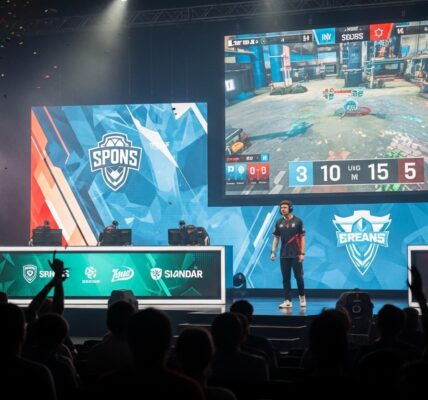
These large-scale tournaments have become the centerpiece of esports, with millions of fans tuning in to watch the world’s best players compete. The events themselves are often held in massive arenas, with elaborate set designs and production values that rival those of traditional sports broadcasts. The combination of high-quality broadcasts, exciting gameplay, and fan engagement has made esports events a must-watch for millions of people worldwide.
The Esports Audience: Global, Diverse, and Engaged
One of the unique aspects of esports is its audience. Unlike traditional sports, which often have regional or national fan bases, esports attracts a global audience. The rise of online streaming platforms and the accessibility of games like Fortnite, League of Legends, and PUBG have made it possible for anyone with an internet connection to watch and participate in esports events.
The esports community is also diverse, with fans from all over the world, regardless of age, gender, or background. Esports has become a unifying force, bringing together people from different cultures to enjoy the shared experience of competitive gaming. The interaction between players and fans through social media, live streams, and fan forums has created a sense of community that transcends geographical boundaries.
The digital nature of esports has also made it more accessible than traditional sports. Fans can watch live events for free, interact with players and commentators, and even participate in events through online competitions. This level of accessibility has contributed to the rapid growth of esports, making it a mainstream form of entertainment.
The Business of Esports: Revenue Streams and Growth
Esports has quickly become a multi-billion-dollar industry, with a wide range of revenue streams. In addition to sponsorships, prize money, and ticket sales, esports generates income from media rights, merchandise sales, and advertising. Companies like Twitch and YouTube Gaming profit from broadcasting esports tournaments, while esports organizations sell merchandise and create branded content.
Esports events also attract significant advertising revenue. Just as traditional sports leagues sell advertising space during broadcasts, esports leagues and tournaments sell advertising time to companies looking to target the esports audience. This has created new opportunities for brands to connect with a tech-savvy, millennial demographic that is often difficult to reach through traditional advertising channels.
The growth of esports is expected to continue in the coming years, with analysts predicting that the global esports market will exceed $1.5 billion by 2023. As the industry grows, new opportunities for investment and sponsorship will emerge, further solidifying esports as a major force in the entertainment world.
The Future of Esports: Expanding Horizons
The future of esports looks incredibly promising. As technology continues to advance, new innovations in virtual reality (VR) and augmented reality (AR) are likely to change the way we experience esports. VR gaming, for example, could allow fans to immerse themselves in esports competitions, viewing matches from the perspective of the players or from unique angles that aren’t possible with traditional broadcasts.
Mobile esports also holds great potential, particularly in regions like Southeast Asia, where mobile gaming is the dominant platform. Games like PUBG Mobile and Mobile Legends have already gained large followings, and mobile esports is expected to become a major segment of the global esports market.
Additionally, esports is likely to continue integrating with traditional sports. As more sports leagues like the NBA and NFL invest in esports, we may see hybrid events that combine elements of both esports and traditional sports. This could create exciting new opportunities for fans and sponsors alike.