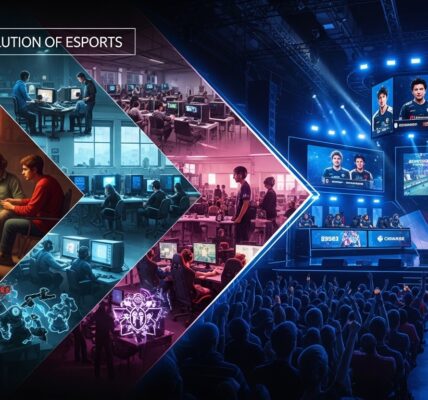


In recent years, esports has become a global powerhouse, evolving from niche gaming competitions to a multi-billion-dollar industry with millions of passionate fans and professional players. Competitive gaming, once seen as a hobby or pastime, has now emerged as a legitimate sport with its own infrastructure, ecosystem, and fervent following. Esports has not only captured the attention of traditional sports fans but has also opened doors to a new generation of digital athletes, content creators, and fans. This blog delves into the rise of esports, its impact on culture and society, the challenges it faces, and the future trajectory of this fast-evolving industry.
The Origins of Esports: From Humble Beginnings to Global Phenomenon
Esports, or electronic sports, refers to organized competitive video gaming, where individuals or teams compete in various video game titles, often in front of a live audience or through streaming platforms. Though competitive gaming dates back to the early days of video games in the 1970s and 1980s, the modern form of esports began to take shape in the late 1990s and early 2000s. During this time, games like “StarCraft,” “Quake,” and “Counter-Strike” became popular among competitive gamers. LAN (Local Area Network) tournaments allowed players to compete in person, and the rapid growth of the internet in the early 2000s enabled players to compete against each other online, making esports more accessible and inclusive.
The real turning point came in 2010 with the launch of live streaming platforms such as Twitch, which allowed gamers to broadcast their gameplay to a global audience. This gave esports unprecedented visibility, helping it expand beyond small, local tournaments and into a global entertainment industry. Major esports tournaments, such as the “League of Legends World Championship” and “The International” for Dota 2, began attracting millions of viewers and offering multi-million-dollar prize pools. Today, esports tournaments rival traditional sports events in terms of viewership, sponsorship, and overall impact.
The Professionalization of Esports: From Amateurs to Elite Athletes
One of the most significant changes in the world of esports is the professionalization of players. What was once a hobby for passionate gamers has now become a viable career for those who possess exceptional skill and dedication. Professional esports players train rigorously, spending hours each day practicing, analyzing their gameplay, and studying strategies. Much like traditional athletes, esports players need to maintain peak physical and mental performance to compete at the highest levels.
Training for esports involves more than just playing the game. Players undergo physical conditioning to improve reflexes, focus, and stamina, which are critical for high-level competition. In games like “Overwatch” and “Counter-Strike,” where reaction time is crucial, physical fitness can make the difference between winning and losing. Mental conditioning is also important, as players must develop the psychological fortitude to handle the pressures of competition, including long hours of gameplay, high-stakes matches, and the stress of live audiences.
Team-based esports like “League of Legends,” “Valorant,” and “Fortnite” also require a great deal of teamwork, communication, and strategy. In these games, players often specialize in specific roles, such as support, carry, or tank, and must coordinate with teammates to achieve victory. Much like traditional team sports, team chemistry, leadership, and cooperation are essential for success in esports. The rise of esports has created a new breed of athletes who are celebrated for their precision, skill, and dedication.
The Business Side of Esports: A Growing Multi-Billion-Dollar Industry
Esports is not just a hobby for players; it’s a thriving business with multiple revenue streams. The industry generates billions of dollars annually through sponsorships, advertising, merchandise sales, media rights, and ticket sales to live events. Major brands from diverse sectors, including energy drinks, tech, and clothing, have recognized the marketing potential of esports and have invested heavily in sponsorships and partnerships. Companies like Intel, Coca-Cola, Red Bull, and Nike sponsor teams, players, and events, further legitimizing esports as a mainstream industry.
Esports tournaments and leagues are major events in their own right. Some of the largest tournaments, such as “The International” (Dota 2), “League of Legends World Championship,” and “Fortnite World Cup,” offer prize pools worth tens of millions of dollars. These tournaments draw massive global audiences, both online and in person, filling arenas and stadiums with fans who cheer on their favorite teams and players. The largest esports tournaments have surpassed traditional sports events in terms of viewership, reaching millions of people across the globe through live streaming platforms like Twitch, YouTube Gaming, and Facebook Gaming.
In addition to sponsorships and advertising, esports organizations generate revenue from merchandise sales, ticket sales to live events, and content creation. Esports teams often sell jerseys, apparel, and other branded merchandise to fans, creating an additional revenue stream. The rise of esports has also led to the creation of professional leagues, where top-tier players and teams compete in regular seasons, similar to how traditional sports operate. These leagues provide a structured environment for competition and offer opportunities for both players and organizations to profit.
Streaming Platforms and the Digital Fan Experience
The rise of streaming platforms has been one of the key factors in the global growth of esports. Platforms like Twitch, YouTube Gaming, and Facebook Gaming have provided a space for gamers to share their content with a global audience. These platforms allow players to stream their gameplay live, interact with viewers in real-time, and build loyal fanbases. Streamers can generate revenue through advertisements, subscriptions, and donations, allowing many to turn their passion for gaming into a full-time career.
Streaming platforms have also made esports more accessible to fans. Instead of attending live events, fans can watch high-level competitions from the comfort of their own homes. This has opened up esports to a much larger audience, with millions of fans tuning in to watch their favorite players and teams compete. The interactive nature of live streaming, including the ability to chat with other viewers and engage with players, creates a unique experience that traditional sports broadcasts cannot match.
Esports streaming has also led to the rise of content creators, who produce a wide range of content beyond live gameplay. These creators generate content like tutorials, game reviews, strategy guides, and even humorous skits, attracting viewers who want to learn more about the games they love or simply be entertained. Many successful esports players and teams have built substantial followings on these platforms, further fueling the popularity of the industry.
The Global Appeal of Esports: A Community Without Borders
One of the most remarkable aspects of esports is its global nature. Unlike traditional sports, which often have regional or national boundaries, esports transcends geographic limits. Players from all over the world can compete against each other in online tournaments, and fans can watch competitions in real-time, regardless of their location. This worldwide accessibility has contributed to the rapid rise of esports in countries across the globe.
Esports has gained particular popularity in countries like South Korea, China, the United States, and various European nations. In South Korea, esports is considered a national pastime, with professional gaming leagues and tournaments being broadcast on television. The country’s commitment to esports infrastructure has helped nurture a thriving esports culture, producing some of the most successful teams and players in the world. Meanwhile, in China, esports has become a booming industry, with massive investments from both the government and private companies.
In regions like Southeast Asia, Latin America, and the Middle East, esports is rapidly gaining traction, with new fans, players, and tournaments emerging regularly. These regions offer vast untapped potential for growth, and the expansion of internet access and mobile gaming is further driving the growth of esports in emerging markets.
Challenges Facing the Esports Industry
Despite its rapid growth, the esports industry faces several challenges. One of the biggest issues is the lack of regulation and consistency across different tournaments and leagues. Unlike traditional sports, which have well-established governing bodies, esports is still a young industry that lacks centralized oversight. This has led to issues such as unfair competition, match-fixing, and player exploitation. As the industry matures, it will need to develop better regulations to ensure fair play, transparency, and the protection of players’ rights.
Another challenge is the growing concern over player burnout and mental health. The intense pressure to perform at the highest level, combined with long hours of practice, can take a toll on players’ mental and physical well-being. Many esports players face mental health issues such as anxiety, depression, and stress, which can affect their performance and overall quality of life. Addressing these issues will be critical to ensuring the long-term health of the esports ecosystem.
Additionally, there are concerns about the accessibility of esports. While many games are free-to-play, the hardware required for competitive gaming can be expensive. High-performance PCs, gaming peripherals, and internet access are essential for playing at a professional level, making esports potentially inaccessible to players in lower-income communities. As the industry grows, there will need to be more efforts to democratize access to esports and create pathways for talent development in underserved regions.
The Future of Esports: Boundless Opportunities
The future of esports is incredibly promising. With continued technological advancements in virtual reality (VR), augmented reality (AR), and cloud gaming, the landscape of esports will continue to evolve. VR and AR could offer more immersive experiences for players and fans, taking esports competitions to new levels of interactivity and engagement. Cloud gaming, on the other hand, could make high-level esports competition more accessible by allowing players to compete on any device without the need for expensive hardware.
Esports is also likely to continue its expansion into mainstream entertainment. With the potential for esports to be included in major sporting events like the Olympics, the line between traditional sports and esports will continue to blur. As esports gains wider recognition, it will become an integral part of global entertainment culture.